Low Hours, Old Year: How to Read a Used Wheel Loader's Hours Against Its Age (2027 Guide)
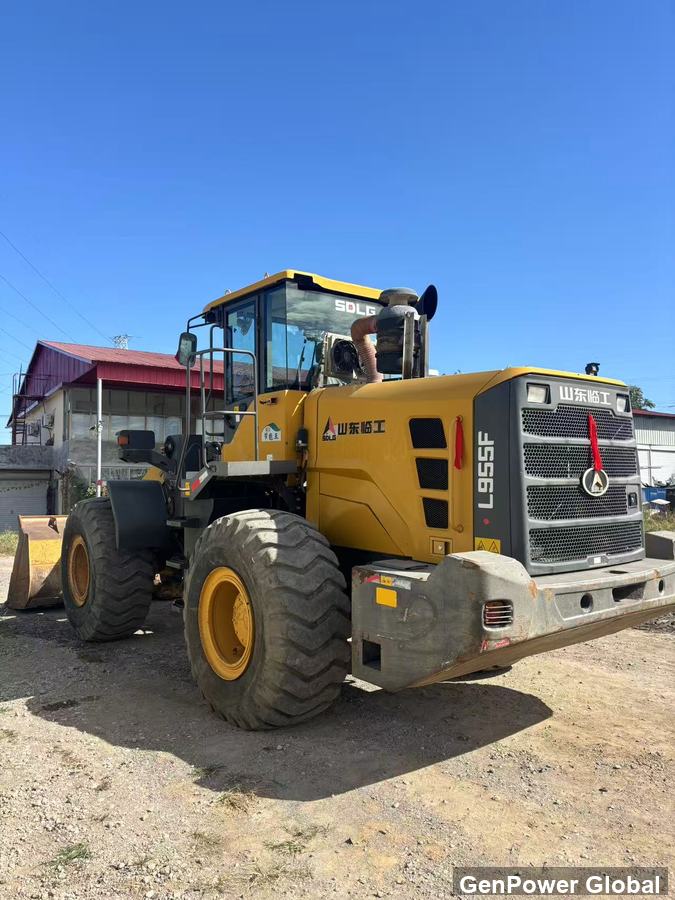
This week we listed a May-2013 SDLG L955F in our Hebei yard showing roughly 3,200 hours on the owner’s records — a twelve-year-old machine carrying fewer hours than many five-year-old ones are sold with. Within a day of the photos going up, a buyer asked the question every low-hours-old-year listing deserves: is this a genuinely kept machine, or a meter that has been swapped somewhere along the way? Both outcomes are real in this trade. This guide is the method we use to tell them apart, with this exact unit as the worked example, and the same method applies whatever the badge on the nose — SDLG, LiuGong, XCMG, Komatsu or CAT.
1. What an hour meter actually measures on a loader
Wheel loaders earn their hours slowly. Unlike an excavator that swings a heavy frame through a full cycle all day, a loader spends much of its life on short travel moves, tramming between stockpiles, or parked while trucks queue. That is why a hard-working five-year-old loader and a lightly-worked twelve-year-old one can wear similarly — and why hours on a loader understate or overstate reality more easily than on a digger.
Do the arithmetic on our unit: 3,200 hours across twelve model years is about 265 hours a year. That is the profile of a machine that worked one season hard and stood the rest, or served as a yard’s second unit behind a primary digger. In provincial Chinese fleets that profile is common — machines are bought for a project, used seasonally, and left parked under cover in between. The same is true of rental-fleet reserve units that only come out when the primary machine is down.
Here is the uncomfortable part: that profile is also exactly what a rolled-back meter imitates. A twelve-year-old machine with honest 3,200 hours and one with a swapped meter look identical on paper. The number alone settles nothing. Treat every hour figure — ours included — as a claim to be verified, not a fact to be trusted, and the rest of this guide becomes a checklist you can run on any listing, not just ours.
Sizing what is plausible for the machine’s supposed job also helps. A loader on a sand dredging site or a quarry face runs ten hours a day and can honestly burn 2,500–3,000 hours a year; a municipal or farm machine that works one season lands nearer 300–600. When a seller quotes a reading, ask what the machine actually did — whose yard, which material, how many months a year — and check that the story multiplies out to the number. A story that cannot survive that arithmetic deserves the suspicion it gets; one that can has earned the right to the next check, which is wear.
2. Why the year still matters when the hours are low
If hours were everything, a 2013 machine at 3,200 hours would price like a 2019 one at 3,000. It does not, and should not, because a wheel loader ages on two clocks. The meter runs on the first; the calendar runs the second, and the calendar never stops.
Rubber and soft parts age whether or not the machine works: hydraulic hoses, the fan and alternator belts, O-rings in the cylinders, cab seals, wiring insulation. On a twelve-year-old unit these are consumables approaching their end of life regardless of the reading, so the honest way to price one is the listed price plus a hose-and-belt budget you should hold back from day one. Tyres tell the same story: the date codes molded into the sidewall say when each was made, and a 2013 machine still on early rubber is one budget line away from a set of 23.5-25s — a line that costs real money in most African markets, so price it into your offer rather than discovering it after the container lands.
The year also sets your expectations on the cab and the controls. An L955F of this generation runs mechanical pilot controls and a simpler monitor than the current F-series cabs — fine for a site that wants simple and fixable, less attractive to an operator used to the newest layout. None of this makes the older machine a bad buy; it makes it a differently-shaped one. For a fuller treatment of how the 5-tonne Chinese units compare with a CAT 950 on parts and resale, read our L955F vs 856H vs CAT 950 comparison.
One more calendar item is paperwork, and it matters at the border. This unit’s emissions label records common-rail injection and the SDLG brand — what any destination market accepts is decided by the destination authority and your clearing agent, subject to the latest official notice, so put the label photo in front of your agent before you commit, not after.
3. The verification file: what we photographed, and what we still owe you
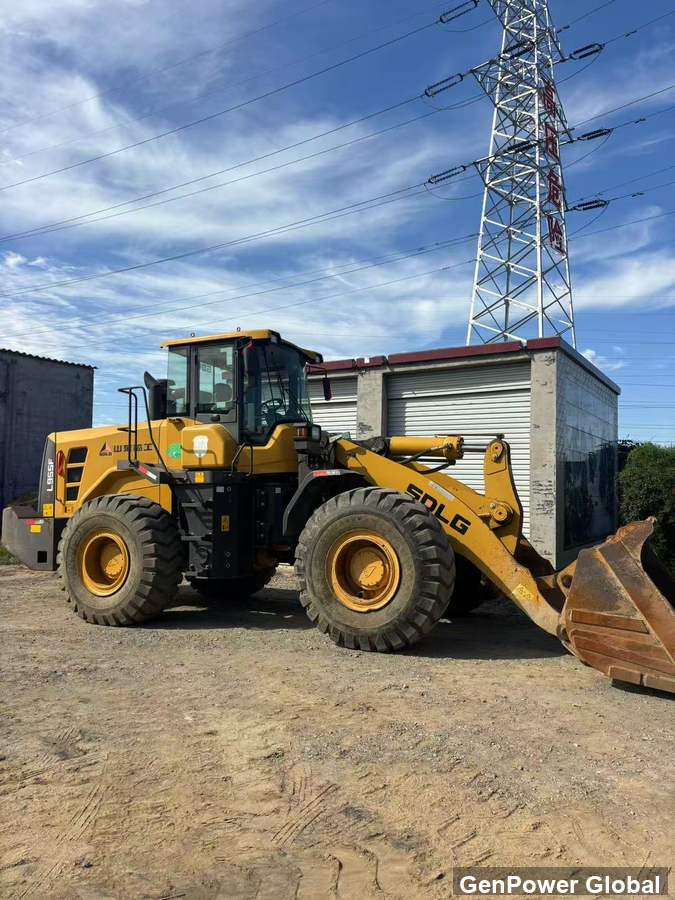
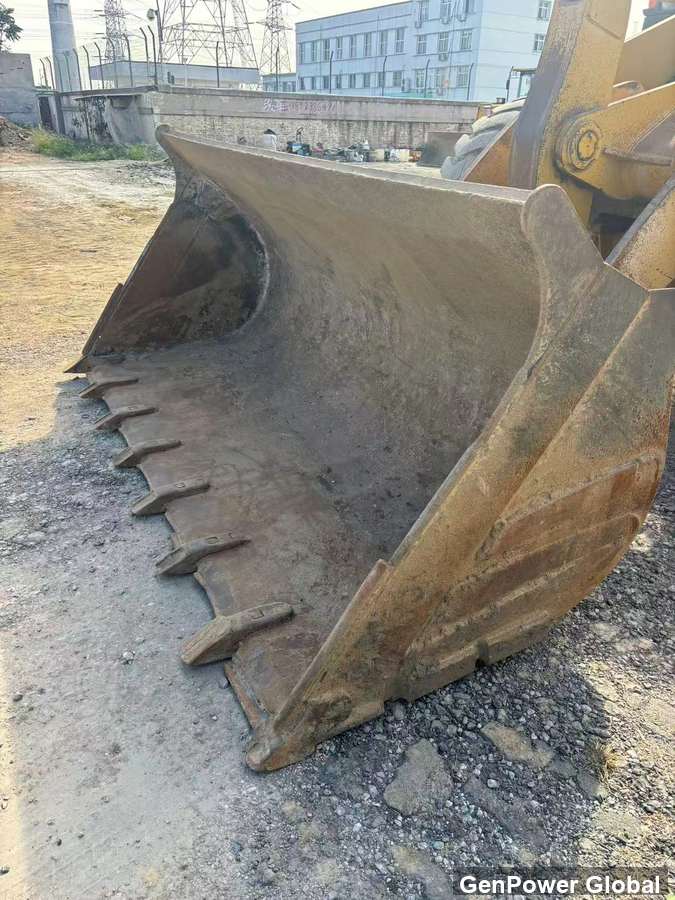
Our rule is that a listing should already contain the paperwork a buyer would otherwise have to chase. On the 2013 L955F page you will find the emissions label photographed close up — production date 05/2013, brand SDLG, common-rail injection — and the engine plate showing the SDLG-dedicated power unit, plus the machine from six angles and the bucket photographed as found.
What the page does not yet have is the hour-meter photograph, and we say so on the page: the reading of roughly 3,200 hours is per the owner’s records, and the meter photo goes to any serious buyer before a deposit moves. That is deliberate. An hour meter can be replaced in ten minutes; a coherent set of wear evidence cannot be faked at all, which is why the meter photo always travels with the wear cross-checks rather than alone.
The four cross-checks we run — and that you should run on any low-hours-old-year candidate — are these. Pedal and seat wear, because a machine with 3,200 hours has barely polished its floor plate. Tyres across all four corners: age codes, brand match, and whether wear agrees with the story. Cutting-edge thickness and bucket corners, photographed as found. And pin and bushing play on the boom and bucket linkages, best judged on a short video of the machine cycling. Where the meter and the wear disagree, trust the wear — always.
The final layer is video, and it is the one remote buyers skip at their cost. Ask for a single continuous, dated take: the machine starting cold, idling, then loading a full bucket through a complete cycle, hour meter visible at the start, serial plate visible at the end. A genuine seller produces that within a day because the file already exists or takes an afternoon to record. A photograph of a meter in a different yard, on a different day, with a different machine in the background, is the single most common warning sign in this trade — we wrote about the same discipline for generators and it applies here unchanged.
4. What our two L955Fs say about 5-tonne pricing
Two SDLG L955F units now sit in our yard a model-year decade apart, and together they make the pricing point better than any table of averages. The bands we published in the October comparison still hold:
| Class | Typical machines | Indicative FOB China (USD) |
|---|---|---|
| 3 t | SDLG L936 / LiuGong 835 older units | 6,000–12,000 |
| 5 t, Chinese brand | SDLG L955F · LiuGong 856H/N · XCMG ZL50GN | 10,000–20,000 |
| 5 t, Western brand | CAT 950H/GC · Komatsu WA320-380 | 22,000–40,000 |
| 6 t and up | CAT 966 · Komatsu WA380-470 | 20,000–45,000 |
Now the two anchors. The June-2019 unit, at roughly 3,000 hours on owner records with its label and frame stamp photographed, lists at USD 14,500 FOB. The May-2013 unit of this guide, at roughly 3,200 hours with its label and engine plate photographed, lists at USD 15,500 FOB. Both sit comfortably mid-band for the 5-tonne Chinese class.
Notice that the older machine prices above the newer one. That is not a typo, and it is the lesson: units are priced individually — on tyres, structure, engine condition, paperwork and the owner’s number — and age is one input among several, never the verdict. The 2013 machine wears strong tyres and photographs honestly for its year, and its owner knows it. If you want the newest cab at the lower number, the 2019 L955F page is the one to open. If the strong-tyre 2013 story suits your site and your budget, inspect that unit on its own evidence. Compare units, not years — and treat both prices as indicative until a live quote confirms them.
The same logic runs in reverse when you negotiate. A unit whose file is complete — meter photo, plates, dated video, wear shots that agree — deserves to trade at mid-band, because the risk you are being paid to take has been removed. A unit whose file is incomplete should trade well below the band floor, and the discount is not meanness but arithmetic: you are now budgeting for the meter you cannot see, the tyres you cannot date and the story you cannot check. Sellers who understand this price their files, not just their machines; buyers who understand it pay for evidence once instead of paying for its absence forever.
5. Six red flags on a low-hours-old-year listing
Run this list on any candidate that pairs an old year with a young meter, wherever it is listed:
1. A replaced or “blank” monitor panel. On many machines the panel is the meter; a brand-new panel on a twelve-year-old cab, or a panel from a different model, is the classic reset signature. 2. Fresh paint on high-wear areas. Pedals, handrails, bucket edge and steps should look their age; paint there is hiding something. 3. Mismatched tyres. Four different brands on a “light-use” machine usually mean the hours story is not the only story. 4. No plate photos. If the listing shows neither an emissions label nor an engine plate, ask why — every machine we list has both. 5. No video. A seller who cannot produce a dated start-and-work take within a day is either not the owner or not confident. 6. A story that shifts. Hours that change between messages, a year that slides between plates, or an owner who cannot say where the machine worked: walk away. The market is long and there is always another unit.
6. Shipping and paperwork, briefly
None of the verification work changes what a shipment needs. We help assemble the standard file — commercial invoice showing the serial number, packing list, bill of lading details, certificate of origin, and a no-asbestos declaration where the destination requires one. Kenya-bound units normally add a PVoC certificate of conformity arranged before shipment; Nigeria clears through Form M and PAAR. We prepare and document; we do not decide compliance — that belongs to the destination authority and your clearing agent, subject to the latest official notice. For a fuller walk-through, read our Kenya and Tanzania import rules guide or the wider Africa importer’s guide.
One practical add: budget a first-service kit into the first shipment — engine, fuel and hydraulic filters plus drive belts, recorded by part number before the container is sealed. On a twelve-year-old machine it is not an upsell; it is the cheapest insurance on the calendar-age items Section 2 described, and it arrives before the machine has burned a single tank of your fuel.
Can a 2013 wheel loader genuinely have only 3,200 hours?
Yes, it happens more often than buyers expect. A loader that worked one season a year, served as a yard's second unit, or belonged to a rental fleet's reserve pool can genuinely average 250-300 hours a year. But the number is a claim, not a fact, until you verify it: a meter photo taken with the engine running, wear photos that agree with the story, and a dated start-and-work video are the minimum evidence before any deposit.
Which matters more when buying used, the year or the hours?
Neither wins on its own; wear is the real witness. Hours are a cross-check against pedal and seat wear, tyre age, cutting-edge thickness and pin play. The year sets expectations the meter cannot: rubber, hoses, seals and wiring age with the calendar, so a twelve-year-old machine needs a hose-and-belt budget even at genuinely low hours. Buy the unit whose meter, wear and paperwork all agree.
How do I verify the hours remotely before paying a deposit?
Ask for one continuous, dated video showing the machine starting cold, idling and working through a full loader cycle with the hour meter visible at the start and the serial plate visible at the end. Cross-check the reading against pedal wear, tyre condition and service stickers. A photograph of a meter in a different yard, on a different day, is worth nothing; a genuine seller produces the video within a day.
What does a used 5-tonne Chinese wheel loader cost FOB China in 2027?
In our 2026/2027 price bands, a used 5-tonne Chinese-brand loader typically lands between 10,000 and 20,000 US dollars FOB China depending on year, hours and paperwork; Western-brand 5-tonne machines run roughly 22,000 to 40,000. Both of our stock SDLG L955F units sit mid-band: the June 2019 unit at about 14,500 dollars and the May 2013 low-hours unit at about 15,500. Every figure is subject to a live quote.
Why does the 2013 unit price above the 2019 one on your site?
Because units are priced individually, not by age alone. The 2013 machine photographs strongly for its year - tyres, structure and engine bay - and its owner values it accordingly, while the 2019 unit is priced to move. If you want the newest cab at the lower number, open the 2019 page; if the strong-tyre 2013 story suits your site, that is the unit to inspect. Compare units, not years.
What documents come with a loader shipment from you?
A commercial invoice showing the serial number, packing list, bill of lading details, certificate of origin, and a no-asbestos declaration where the destination requires one. What we do not do is decide compliance for you: whether the machine is accepted into your market belongs to the destination authority and your clearing agent, subject to the latest official notice. We document honestly and support the application.
The short version
Low hours on an old machine is not a discount category and not a red flag category — it is a verification exercise. The May-2013 L955F in our yard carries roughly 3,200 hours on owner records, and the page behind it already shows the label, the engine plate and the wear; the meter photo and the dated video complete the file before any deposit moves. Compare units rather than years, run the four wear cross-checks on anything that pairs an old year with a young meter, and price the calendar-age rubber honestly. Browse the rest of the loader stock, send us your port through the quote form for CIF numbers on either L955F, and general export questions are answered on our FAQ page.
Prices, dates and wear notes in this guide are 2026/2027 references checked against the machines in our yard; every figure is subject to a live quote and the latest official notice of the relevant authorities.