Kenya & Tanzania Used Machinery Import Rules 2027: Age Limits, PVoC Inspection & Landed Cost
The most expensive mistake an importer makes in Mombasa or Dar es Salaam is not paying too much for the machine. It is discovering, after the vessel has sailed, that the equipment does not meet the destination country's import requirements — then paying storage, penalties and a second inspection to fix it. This guide sets out what we have learned moving used excavators, loaders and generators into Kenya and Tanzania: the age limit that dominates the headlines, the PVoC and Certificate of Conformity paperwork, the port penalties, and the honest spread between a quoted FOB price and a machine working on your site.
Regulations, fees and agency appointments in Kenya and Tanzania change with each official notice. Everything below reflects our latest check and is subject to the latest official notice — confirm the current requirement with KEBS, the KRA, the Tanzania Bureau of Standards or your licensed clearing agent before you commit money. Nothing here is legal or customs advice for your specific shipment.
1. What actually changed in 2026–2027
If you imported into East Africa a few years ago, the process has moved.
Kenya: the 8-year rule and the January 2026 cutoff
Kenya's used-vehicle age limit sits inside KS 1515:2000, the code of practice for the inspection of road vehicles, enforced through annual cutoffs rather than one fixed number. Each year KEBS announces the oldest first-registration year it will accept, and that year rolls forward: the notice applying to shipments arriving from 1 January 2026 accepted only right-hand-drive vehicles first registered in 2019 or later, with certificates held against earlier vehicles scheduled to lapse at the end of 2025. Verify the cutoff against the KEBS notice for the month you ship.
Kenya: the 2026 PVoC framework overhaul
Kenya's pre-export verification of conformity (PVoC) programme was also re-tendered: the prior contracts ran into 2026, and a refreshed framework with reallocated territories and stricter documentary expectations came into force, with full enforcement of the valid-Certificate-of-Conformity requirement from around March 2026. For a China-origin shipment the agency for your zone, the routes and the certificate price may all have changed — ask, in writing, who issues the CoC today.
Tanzania: TBS PVoC and specific second-hand requirements
Tanzania runs its own PVoC programme under the Tanzania Bureau of Standards (TBS), with used products inside the regulated scope. Used mobile machinery, used vehicle spares and used bicycles originating from Japan, for example, have required pre-shipment inspection and a CoC or CoR from an agency such as EAA Company Limited. Tanzania does not apply a blanket age ban to machinery, and its published requirements are mostly framed around specific origins and categories — so a China-origin buyer must confirm their own goods rather than assume a Japanese-origin rule applies.
2. Does the age limit apply to excavators, loaders and generators?
This question fills our inbox. The age limit is, first and foremost, a road-vehicle rule — and used mobile equipment travels a different but still mandatory inspection route. What we will not do is tell you that machinery is exempt, because that is a determination for KEBS to make, not an exporter.
The rule of thumb: road vehicles versus mobile machinery
KS 1515 is written for road vehicles — cars, buses, trucks and motorcycles — and the year-based cutoff is announced in that context. Used mobile equipment and used spare parts for machinery sit under the PVoC umbrella instead: covered goods must carry a Certificate of Conformity issued before shipment, against the relevant Kenya standard or approved specification. An excavator is not checked the same way a car is, but it is definitely checked.
Kenya: how machinery is treated in practice
For a used excavator, wheel loader, dozer or generator heading for Mombasa, plan on the PVoC route: a conformity assessment, a certificate, and a documentary pack proving the machine is what the paperwork says. Age remains the biggest risk factor even here, because the first-registration year, the plate year and the paper year are all cross-checked. Whether a specific year threshold applies to a given piece of mobile equipment is a question for KEBS and your clearing agent; we prepare the evidence so they can judge.
Tanzania: machinery and earth-moving equipment
In Tanzania the same logic holds with a different agency: TBS administers PVoC, used products are in scope, and certain categories of used mobile machinery from specified origins require pre-shipment inspection. There is no general national prohibition on old machinery. Confirm the current TBS requirement for your exact goods and origin before shipping.
How to read the age question correctly
Do not ask "is my machine old enough to be banned?" Ask three better questions: which standard applies to my equipment class here; which agency issues the certificate for my origin; and what year, plate and serial evidence must the certificate reconcile? Those answers decide your shipment. Our role is to give you clean, consistent documents — never to certify your machine for you.
3. PVoC and pre-shipment inspection: who, what, where
PVoC converts a machine in a Chinese yard into a machine that can legally enter a regulated market. It is mandatory for covered goods.
What a Certificate of Conformity actually covers
A CoC is a pre-shipment verification that the goods conform to the applicable standard or approved specification. For used mobile equipment it typically reconciles the make, model and serial number, the year of manufacture shown on the machine, safety-related items and basic condition, and the commercial documents. It is not a warranty of mechanical quality — it is a conformity gate the destination authority will ask to see.
Who issues it
PVoC is administered by the national standards body — KEBS in Kenya, TBS in Tanzania — but the inspection is carried out by authorised agencies appointed to geographic zones. For Kenya, agencies such as SGS, Intertek, Bureau Veritas and QISJ have covered different territories, with Cotecna historically named for mainland China, Taiwan and Hong Kong; for Tanzania, agencies such as Bureau Veritas and EAA have appeared. Because the contracts were re-tendered around 2026, the correct agency for your origin may differ from a 2024 search result — confirm against the standards body's current list, subject to the latest official notice.
Fees, routes and lead time
Inspection cost is normally a percentage of shipment value with minimum and maximum charges, and different routes carry different rates. Published figures for used mobile equipment and used spare parts have been quoted at fractions of a percent of FOB with a floor and ceiling in the low thousands of US dollars, while general route fees have been quoted nearer one-half to six-tenths of a percent of FOB. We avoid a single number: ask the agency for the rate on your goods, subject to the latest official fee schedule. Lead time runs from a few days with complete documents to a few weeks without them.
What happens if you ship without it
Covered goods arriving without a valid CoC are liable to be held for destination inspection rather than cleared, with a fee or penalty on top of storage and possible demurrage. The figures differ between sources, so we do not quote one. The arithmetic rarely favours shipping first and asking later, so treat pre-shipment inspection as a scheduled cost.
Not sure which route your machine needs?
Tell us the unit, its year and your destination port. We will tell you which compliance documents we can prepare and who in your country can confirm the current requirement.
Ask a Compliance Question4. The 8-point pre-shipment checklist we run on every unit
This is the sequence we run before any machine we sell reaches the loading ramp. A conformity assessment is only as good as the evidence behind it — print it and hold your supplier to it.
Pre-Shipment Compliance Checklist (8 points)
- Three-way year match. Engine nameplate, chassis or VIN plate, and the OEM data plate must show a consistent year. We photograph all three and disclose any discrepancy.
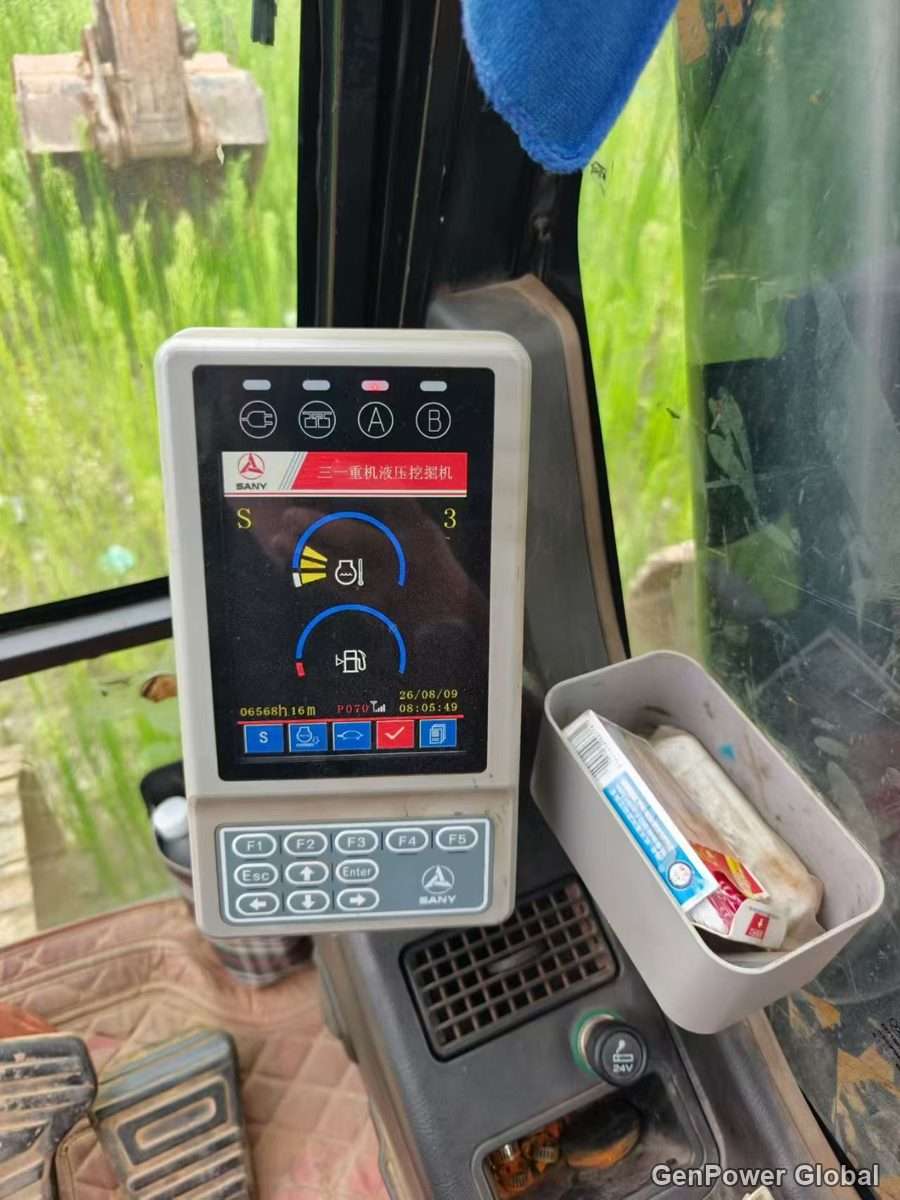
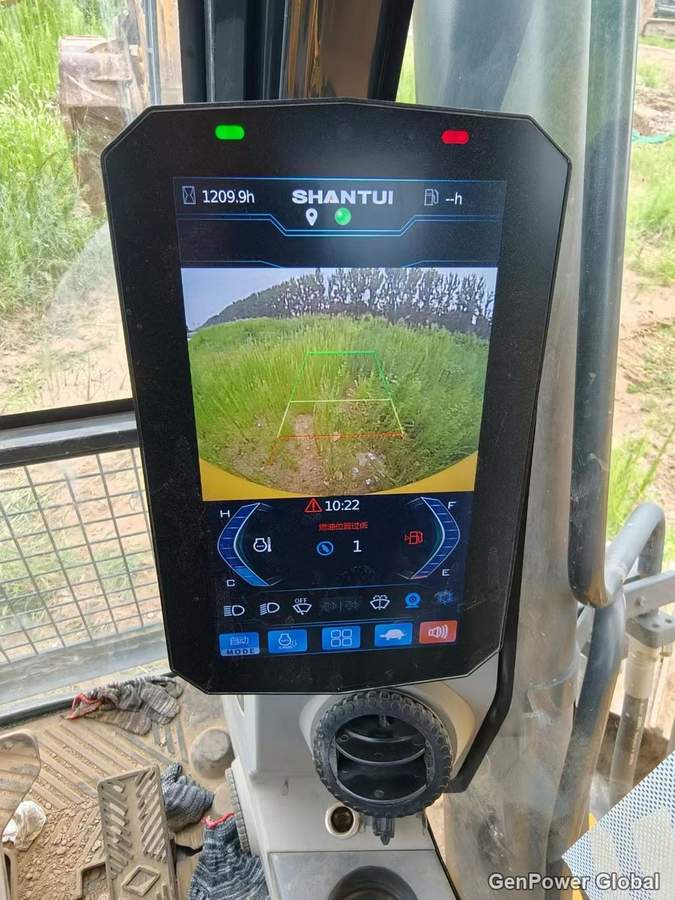
- Hour meter cross-checked against wear. The monitor reading is captured with the engine running, then reconciled against undercarriage, pins, hoses, radiator and exhaust. Where they disagree, we trust the wear.
- No-asbestos declaration and emission spec. Where the applicable standard requires it, we provide a declaration covering brake and clutch materials and confirm the engine's emission configuration.
- Soil, weed and mud cleaning. Quarantine checks object to imported soil. Machines are washed down — including tracks, belly plates and the inside of the bucket — before loading.
- VIN and serial legibility. Plates must be readable in photographs and physically intact. We shoot them clean and keep the file with the unit's record.
- Service and repair records. Where a documented history exists we pass it on; where none exists, we say so plainly.
- Photo and video set for remote inspection. Exterior all round, cab interior, engine bay, hour meter running, plates, and a dated continuous start-and-work video.
- Document consistency. Commercial invoice, packing list, bill of lading details, certificate of origin and the machine records must agree item by item on model, serial and year.
None of this is exotic. It is the difference between a machine that clears and one that sits. Where a client wants independent verification, we welcome a third-party inspector at the yard.
5. Landed cost reality: FOB China to Mombasa and Dar es Salaam
The figures below are 2026/2027 reference ranges in USD, based on the year, hour and condition bands that trade out of Chinese yards. They are industry reference ranges only — never a GenPower commitment or a fixed sale price — and every figure is subject to a live quote, because hours, condition, specification, port and vessel space all move the number.
Generators: 100 / 500 / 1250 kVA
| Equipment | Typical year / hours band | Indicative FOB China (USD) | Indicative landed, Mombasa / Dar (USD) |
|---|---|---|---|
| Diesel generator, 100 kVA | 2016–2020, 2,000–8,000 hrs | 6,000–12,000 | 9,000–18,000 |
| Diesel generator, 500 kVA | 2013–2020, 1,000–10,000 hrs | 22,000–45,000 | 32,000–65,000 |
| Diesel generator, 1250 kVA | 2012–2019, 1,000–12,000 hrs | 55,000–110,000 | 80,000–160,000 |
Excavators: 20-ton class
| Equipment | Typical year / hours band | Indicative FOB China (USD) | Indicative landed, Mombasa / Dar (USD) |
|---|---|---|---|
| 20-ton excavator (Chinese brand) | 2018–2022, 2,000–8,000 hrs | 28,000–55,000 | 40,000–80,000 |
| 20-ton excavator (Japanese / Western brand) | 2013–2019, 4,000–12,000 hrs | 28,000–48,000 | 42,000–75,000 |
The cost lines that surprise first-time importers
- Ocean freight and marine insurance. A 20-ton machine moves in a container, on a flat rack or as break-bulk — five figures in USD per unit, with wide seasonal swings.
- Customs duty. Charged on the assessed value, which for used equipment is often a reference depreciation figure rather than your invoice price.
- VAT. Applied in the destination country, typically on the duty-inclusive value.
- Inspection and conformity fees. The PVoC/CoC cost, plus any destination inspection charge if the paperwork is incomplete on arrival.
- Port and clearance charges. Terminal handling, agency and documentation fees, plus storage or demurrage if clearance is slow.
- Inland transport to site. A 20-ton excavator needs a low-bed trailer and, in some cities, permits — confirm the trucking rate before you commit.
As a planning rule of thumb, expect the landed cost before duty and VAT to sit roughly 10–25% above FOB, with duty, VAT and inland transport on top. For a CIF quote tied to a specific vessel and port, ask us directly rather than extrapolating a percentage. Every number above is a 2026/2027 reference range and subject to a live quote and the latest official fee schedules.
6. Kenya vs Tanzania: side by side
The two markets share a coastline and little else about their import process. Confirm each cell below with an official source before you act on it.
| Factor | Kenya | Tanzania |
|---|---|---|
| Age limit | Rolling annual cutoff for road vehicles under KS 1515:2000; January 2026 notice accepted first registration 2019 or later, RHD only. Applicability to specific mobile equipment is a KEBS determination. | No blanket machinery age ban. Some vehicle categories carry an age-linked excise measure, from which machinery and earth-moving equipment have generally been treated separately. |
| Driving side | Right-hand drive. | Right-hand drive. |
| Conformity programme | PVoC administered by KEBS; a valid Certificate of Conformity required for regulated goods, with a re-tendered framework enforced during 2026. | PVoC administered by TBS; used products in scope, with specific category/origin requirements. |
| Inspection agency direction | Authorised agencies by zone — historically SGS, Intertek, Bureau Veritas, QISJ, with Cotecna named for mainland China, Taiwan and Hong Kong. | Authorised agencies such as Bureau Veritas and EAA have appeared for specific categories and origins, notably Japanese-origin used mobile machinery and spares. |
| Main port | Mombasa (also serving landlocked East African markets). | Dar es Salaam. |
| Key risk | Year and plate reconciliation against a rolling cutoff, plus the re-tendered CoC agency list. | Category-specific pre-shipment CoC requirements and destination penalties for non-compliance. |
The practical conclusion: the same machine travelling to Kenya and to Tanzania faces a different compliance path and cost structure. Decide your destination country before you choose the unit.
7. Where GenPower fits — our stock and how we help
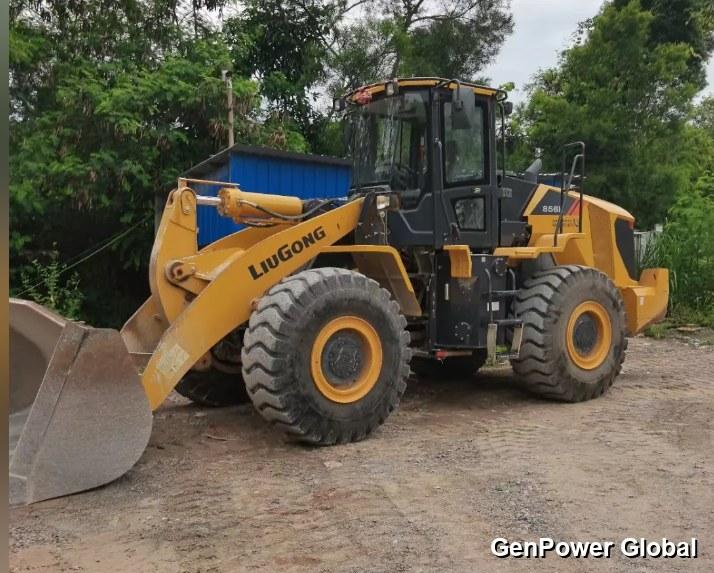
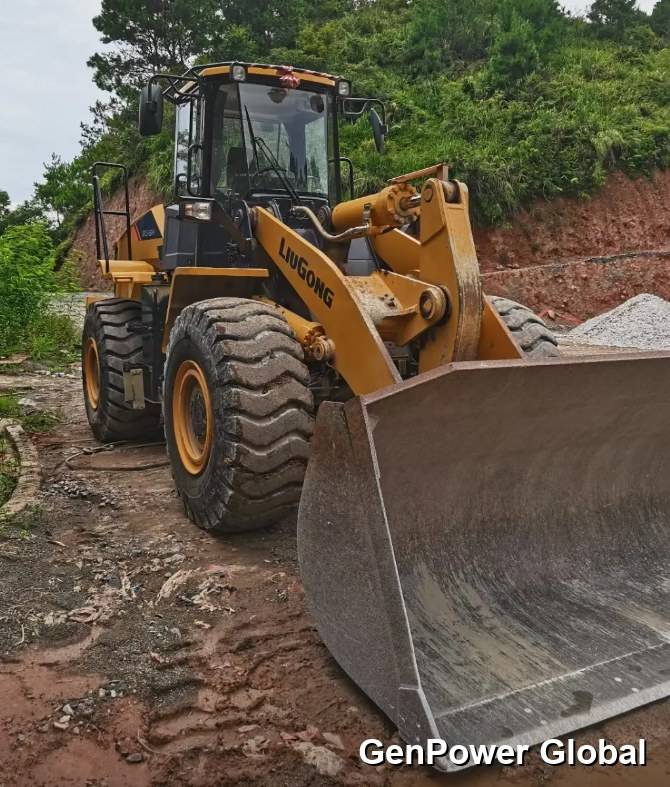
We are equipment exporters, not a customs broker and not a standards body. What we own is the inventory and the evidence behind it. Between our two yards in Shijiazhuang and Xiong'an, Hebei Province, we normally carry close to a hundred units across used generators, hydraulic excavators and wheel loaders — including SANY and Shantui excavators in the 2018–2025 range, LiuGong 856N and 856H loaders, and Cummins and Caterpillar generating sets.
What we can do is concrete and checkable. We send real photographs of the specific unit — never a catalogue image — including the hour meter with the engine running and the data and serial plates, plus a dated start-and-work video on request. We record the machine's year honestly across plate, chassis and paperwork, and we say when a record is missing. We also help assemble the documents a pre-shipment inspection asks for: commercial invoice, packing list, bill of lading details, certificate of origin and a no-asbestos declaration where required.
What we do not do is certify a machine for a destination. Age is a checkable asset fact, and we state it faithfully on the plate, the VIN and the data plate — but whether a specific unit meets a specific country's current requirement is a question for the destination authority and your clearing agent.
Send your spec and destination port
Tell us the model or class, hours band, budget and whether the machine is bound for Kenya or Tanzania. We will reply with matched units, real photos, an honest condition note and the documents we can prepare — within 12 hours.
Send Your Requirement8. Frequently asked questions
Does the 8-year rule apply to excavators or only to cars?
Kenya's age limit is framed in KS 1515:2000, the code of practice for the inspection of road vehicles, and the annual cutoff announced by KEBS has historically been applied to road vehicles such as cars, buses, trucks and motorcycles. Used mobile equipment — excavators, loaders, dozers and generators — travels the PVoC route instead, with its own Certificate of Conformity requirement. Whether a specific year threshold also applies to a given class of mobile equipment is not something an exporter can decide for you; confirm with KEBS or your clearing agent, subject to the latest official notice.
Which body issues the Certificate of Conformity for machines coming from China?
PVoC for Kenya is administered by KEBS and delivered by authorised inspection agencies. Cotecna has historically been named for mainland China, Taiwan and Hong Kong, while SGS, Intertek, Bureau Veritas and QISJ have covered other territories. The roster and zones were re-tendered around 2026, so the correct agency may differ from last year's. Ask which agency currently issues the CoC for your origin, and confirm it against the KEBS published list, subject to the latest official notice.
What if I already shipped without a Certificate of Conformity?
Goods that arrive without the required conformity documentation may be routed to destination inspection rather than cleared, with a fee or penalty on top of storage and possible demurrage. The exact percentage and the minimum and maximum charges differ between sources, so we do not quote a single figure. Arranging the inspection before the vessel sails is faster and cheaper than correcting it after arrival, subject to the latest official notice.
Does Tanzania ban older machines?
Tanzania does not operate a blanket age ban on used machinery. PVoC is administered there by TBS, used products are within scope, and certain categories — notably used mobile machinery and vehicle spares from Japan — have required a CoC or CoR from an agency such as EAA before shipment. Because the published requirements are mostly framed around specific origins and categories, a China-origin buyer should confirm the current TBS requirement for their exact goods, subject to the latest official notice.
Can you provide photos, hours proof and compliance documents?
Yes. For every unit we photograph the hour meter with the engine running, the data plate, the chassis or VIN plate and the serial number, and we can send a dated start-and-work video. We also help prepare the documents a pre-shipment inspection typically needs — commercial invoice, packing list, bill of lading details, certificate of origin and a no-asbestos declaration. We do not determine compliance for you; that belongs to the destination authority and your clearing agent.
How fast can you match a unit to my requirement?
Send the model or class, the hours band you will accept, your budget and your destination port, and we aim to reply with matched units, real photos and an honest condition note within 12 hours. If we do not hold a suitable unit we will tell you rather than substitute one from a borrowed photograph.
How much should I budget on top of the FOB price?
As a planning rule of thumb only, expect ocean freight, marine insurance and destination charges to add roughly 10–25% of FOB on a single 20-ton machine to Mombasa or Dar es Salaam, with duty, VAT, inspection fees and inland trucking on top. Used equipment is often valued for duty at a reference depreciation figure rather than your invoice price, so budget against the assessed value. Every figure here is a 2026/2027 reference range and subject to a live quote.
Conclusion: import the compliance file, not just the machine
The rule that matters most is not the one about years. It is that your paperwork must match your machine, provable before the vessel sails. Kenya's rolling age limit and re-tendered PVoC framework, and Tanzania's category-specific TBS requirements, all demand the same thing: know what your destination requires before you pay a deposit, and bring evidence that can be checked. Whether a specific unit clears is the destination authority's call — confirm it with your clearing agent, and treat everything here as subject to the latest official notice.
That is why we work the way we do: real photographs, honest hours, consistent documents, and no promises we cannot keep. Start early and we will help you build the file that makes clearing uneventful.
Talk to us before your next East Africa shipment
Call +86 191 3116 9379, email yong@genpowerglobal.com, or send your requirement through the contact form. Tell us the machine and the port; we will match units, document them honestly and tell you plainly what we can and cannot do on compliance.
Send Your RequirementRelated guides from our team
Browse current units on our used equipment stock list, or see how we inspect and document every machine before you commit.
Editorial note: this guide describes import requirements and inspection processes in Kenya and Tanzania as of our latest check in October 2026, and every regulation, fee, agency appointment and threshold mentioned is subject to the latest official notice from KEBS, the Kenya Revenue Authority, the Tanzania Bureau of Standards or the relevant authority. All prices and cost figures are indicative 2026/2027 reference ranges in USD that vary with year, hours, condition, specification, port and vessel space, and are subject to a live quote — they are not a GenPower commitment or a fixed sale price. Nothing here is legal, tax or customs advice for your specific shipment; confirm current requirements with the destination authority and your licensed clearing agent before you commit money. We do not make compliance determinations on behalf of any buyer, and we do not certify any specific unit for any specific market. Photographs in this guide were taken at GenPower Global's own yards in Hebei, China, and show the units described.