Used Diesel Generator Prices in Nigeria & Kenya 2027: Full FOB Breakdown
After twenty years in the diesel generator rental business, the question I am asked most often has barely changed: why does one supplier quote a used 500 kVA set at around thirty thousand dollars and another at close to sixty? The answer is almost never luck. It comes from five variables you can inspect and five places where a first-time importer quietly overspends between the Chinese yard and the Lagos or Mombasa quay.
Every price here is a 2026/2027 industry reference range in USD and subject to a live quote, not a GenPower price, and any regulation, duty, tax or port charge is subject to the latest official notice. For the compliance side of importing, see our companion guide on Kenya & Tanzania used machinery import rules.
1. Nigeria and Kenya buy generators for different reasons
Before price, understand demand: the same 500 kVA set solves a different problem in Lagos than in Nairobi.
Nigeria: power as a necessity, not a backup
Nigeria runs on generators. Grid installed capacity is reported around 13,625 MW, yet delivered power runs far below it — NERC figures placed generation near a third of capacity at points in early 2026, and one widely reported low was around 3,885 MW. For factories and cold stores a set therefore runs as prime power, and diesel near ₦1,350 per litre keeps demand leaning toward stout medium-to-large sets that are easy to repair and easy to source parts for.
Kenya: project power and standby
Kenya's grid is steadier, so demand clusters around construction, agricultural processing, telecom and standby duty, and buyers there weigh the documents that let a set enter cleanly and the resale value when a project ends.
What this means for your spec
For the same 500 kVA, then, a Nigerian buyer optimises cost of ownership and serviceability, a Kenyan buyer document compliance and resale value.
2. What actually sets the FOB price of a used generator
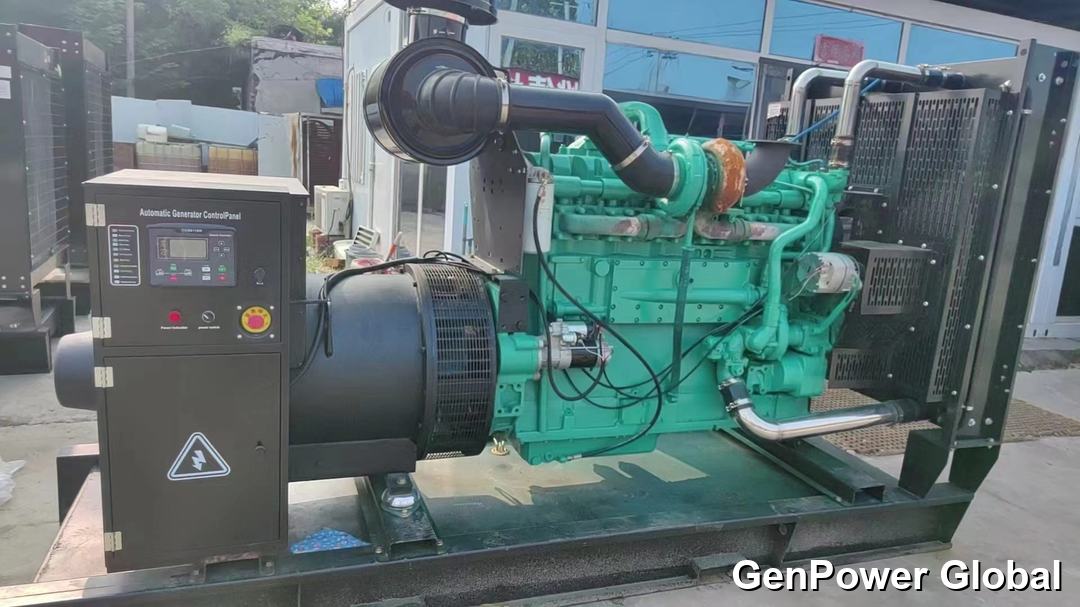
The FOB price of a used set is decided long before anyone types a number into a quotation. When we price a unit we read the machine and its evidence, not just a kVA label.
Brand and engine family
Cummins, Caterpillar and Perkins hold their value because the engines are well understood, parts circulate widely and any competent workshop abroad can service them. That resale strength is priced in: the same kVA from a recognised family routinely sits higher than an unbranded set. A generic set can look cheap up front, but it usually discounts on resale and can leave you chasing a proprietary part from a single source.
Year and — more important — verified running hours
Buyers often ask the year first; hours matter more. A 2019 set with 12,000 hours is a very different asset from a 2013 set with 2,500, and a high-year, low-hours machine usually commands more than a newer calendar year with heavy use. This is why we insist on the controller reading captured with the engine running, then reconciled against wear: oil and coolant condition, exhaust colour, radiator and alternator state. The panel gives a claim; the machine gives the evidence.
Configuration: open-skid versus silent canopy, ATS, voltage and phase
Configuration moves price quickly. An open-skid set is cheaper than the same package in a silent acoustic canopy, which can add a double-digit percentage depending on sound level. An automatic transfer switch, a synchronising panel or a containerised build each add cost. Voltage and phase matter too: 400V/50Hz three-phase is the common African standard, and a set already matched to it avoids reconnection. One that needs re-tapping or re-winding after arrival is cheaper on the invoice and dearer on the site.
Alternator, controller and the documentation pack
Behind every engine is an alternator, and behind every set a controller. Recognised brands raise value and reliability. The documentation pack — manuals, nameplates and any service records — is quiet but real value: a complete file supports clearing and resale, while a missing history is a discount the next buyer will demand from you.
The price-driver table
The table below shows the direction each factor pushes price and a rough magnitude. Every figure is a reference direction only, not a formula; the combination produces the wide bands later in this guide.
| Price driver | Direction of effect | Rough magnitude (reference only) |
|---|---|---|
| Brand / engine family (Cummins, CAT, Perkins vs generic) | Higher resale and parts support push price up | A recognised family can sit roughly 20–40% above an unbranded set of the same kVA |
| Verified running hours | Lower hours push price up; hours outweigh calendar year | A genuinely low-hour set can command in the region of 15–30% more |
| Year of manufacture | Newer year pushes price up, but subordinate to hours | A few percent per year, all else equal |
| Open-skid vs silent canopy | Canopy and acoustic build push price up | Canopy premium commonly around 10–20% |
| ATS / paralleling / containerised | Each added function pushes price up | Depends on rating and switchgear — often several thousand USD |
| Voltage and phase match (400V/50Hz 3-phase) | A standard local match avoids cost; non-standard needs rework | Reconnection can add materially to landed cost |
| Alternator and controller brand | Recognised brands push price up | Modest to material, model-dependent |
| Documentation pack | Complete manuals and service records add value; gaps discount | Buyer-led; a missing history is a negotiation lever |
Want us to price the machine, not the label?
Send the kVA band, the hours you will accept and your destination port. We will reply with real photos, an honest condition note and a written price band within 12 hours.
Send Your Requirement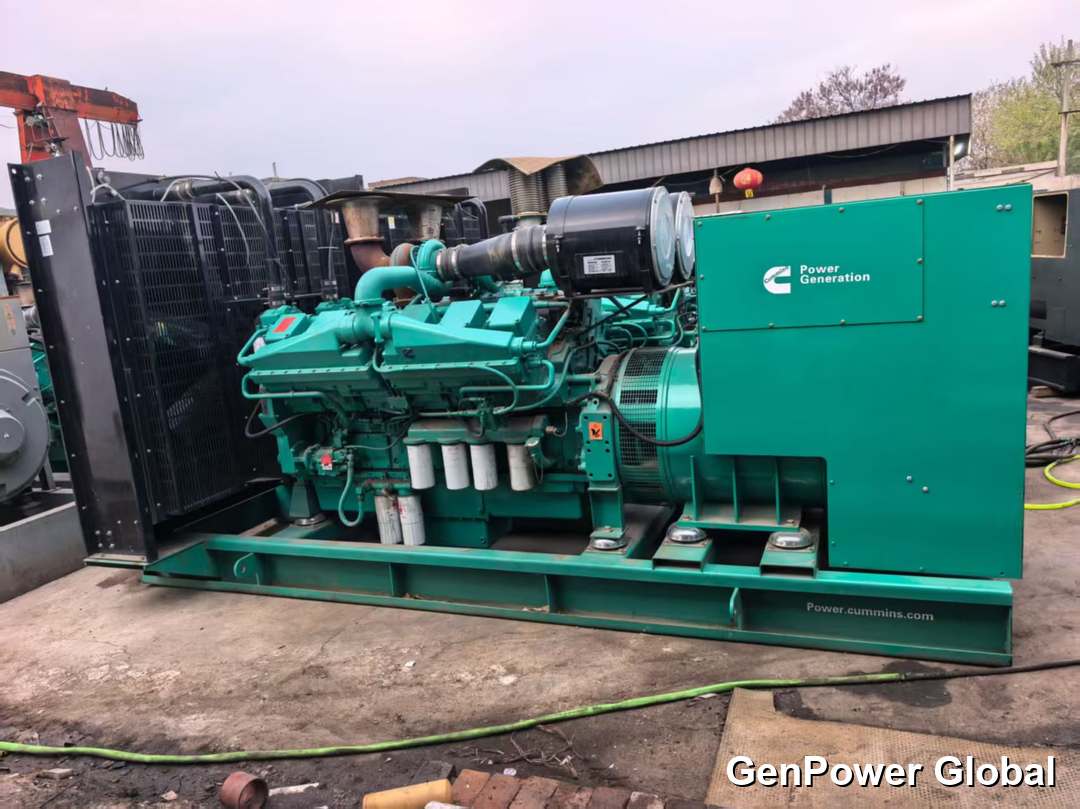
3. Which kVA band fits the job — a rental-fleet view
Twenty years of renting sets out tells us which band turns over fastest and which sits in the yard — and the deepest-demand bands are also where mistakes are easiest to spot and to resell.
The 100 kVA band
Around 100 kVA is the workhorse of small sites: shops, clinics, small processing, telecom and standby. It moves fastest and resells most easily, which is why first-time importers often start here — the price is low, the freight simple and the set rarely sits idle.
The 500 kVA band
Around 500 kVA is the steady earner: mid-sized factories, hotels, mixed-use estates and commercial centres. Over a rental cycle it is our most stable band — demand is broad, replacement cycles predictable and a buyer usually available.
The 1250 kVA band
Around 1250 kVA is project power: large factories, industrial parks, mining support and continuous loads. The price is high and the buyer pool smaller, so it is the easiest band to get stuck with. Buy it against a named requirement, not a hunch.
The selection mistakes we see most
The recurring errors are consistent. Buyers oversize, leaving capital idle in steel and fuel; read kVA but ignore kW and power factor; neglect the starting current of motors and pumps; overlook voltage and phase until the container is at the port; and compare price against price without comparing parts availability and serviceability.
| Band | Best-fit load and industries | Rental-fleet view (turnover) |
|---|---|---|
| 100 kVA | Shops, clinics, small processing, telecom sites, standby | Fastest-moving and easiest to resell; common first import |
| 500 kVA | Mid-sized factories, hotels, mixed-use estates, commercial centres | The steadiest band across a rental cycle; broad demand |
| 1250 kVA | Large factories, industrial parks, mining support, continuous load | Project-driven; smaller buyer pool; buy against a named load |
4. FOB price bands: 100 / 500 / 1250 kVA
This table is a map of a wide territory, not a price list. The bands are 2026/2027 industry reference ranges in USD reflecting a real spread in year, brand, hours and condition. The FOB and Mombasa columns match our companion compliance guide exactly, so the two pages reconcile; the Lagos column is indicative only, added to show how much heavier the Nigerian landed number runs. Nothing here is a GenPower commitment, and every figure is subject to a live quote.
Used diesel generators: FOB China and indicative landed cost
| Equipment | Typical year / hours band | Indicative FOB China (USD) | Indicative landed, Mombasa (USD) | Indicative landed, Lagos (USD) |
|---|---|---|---|---|
| Diesel generator, 100 kVA | 2016–2020, 2,000–8,000 hrs | 6,000–12,000 | 9,000–18,000 | ~11,000–22,000 |
| Diesel generator, 500 kVA | 2013–2020, 1,000–10,000 hrs | 22,000–45,000 | 32,000–65,000 | ~38,000–78,000 |
| Diesel generator, 1250 kVA | 2012–2019, 1,000–12,000 hrs | 55,000–110,000 | 80,000–160,000 | ~95,000–190,000 |
Two cautions. First, the width of each band is the honest part: the gap between low and high is the gap between a high-hours generic set and a low-hours recognised-brand set with a full file. Second, the landed columns are directions, not calculations — they fold in freight, insurance, duty, VAT, inspection and the clearing layer, but duty and tax depend on HS sub-heading and assessed value and are subject to the latest official notice. Our companion guide on Kenya & Tanzania import rules walks that arithmetic, and our buyer's guide to used generator suppliers explains how to tell who actually owns the stock you are being quoted.
5. The five places first-time importers overspend
The same five overspends show up again and again. None is a scam; each is a decision that looks reasonable on the day and costs money later.
1. Oversizing the set
The most common and the most expensive. Buyers add a safety margin to a safety margin and land on a set two bands larger than the load. The penalty is paid three times: a bigger purchase price, heavier fuel burn on light loads, and a machine that never reaches a healthy loading point. Calculate the real running and starting load, apply a sensible margin for future growth, and resist the urge to buy the next size up to be safe.
2. Paying for a silent canopy they do not need
A canopy is real value beside housing, a hospital or an office. On a remote plant or inside a purpose-built power house, it is often money spent on an enclosure that does the same job as four walls. The canopy premium is commonly around ten to twenty percent of the set; on a 500 kVA purchase that is not loose change. Match the enclosure to the site, not to a showroom instinct.
3. Missing the ATS or voltage-phase match
Buyers discover at the port — or worse, on site — that the set's voltage or phase does not match the local supply, or that there is no automatic transfer switch to move the load across when the grid falters. Retro-fitting switchgear or reconnecting an alternator abroad is slower and dearer than specifying it correctly before loading. Write the target voltage, frequency, phase and whether you need an ATS into the enquiry, and make the supplier confirm it in writing.
4. Under-declaring CIF and getting re-assessed
A low declared value does not lower the duty in Nigeria the way some importers hope. Customs works from an assessed value — frequently a reference or depreciated figure for used equipment — and can re-assess upward, adding duty, penalties and delay. The remedy is unglamorous: budget against the assessed value rather than the invoice, keep documents consistent, and treat any figure here as subject to the latest official notice.
5. Demurrage and storage at the destination port
The last, and the one importers most often regret. Port storage and container demurrage accrue daily once a container overstays its free window, and Lagos in particular has a reputation for congestion. Reported demurrage figures run into meaningful daily amounts, and they are subject to the latest official notice. The only reliable defence is to have the compliance file and the clearing agent ready before the vessel berths, so paperwork never becomes the reason your container is still on the quay.
6. Lagos vs Mombasa: where the landed number diverges
Two ports, two cost structures. If you are comparing quotes whose CIF numbers look wildly different, this is usually why.
Freight and transit
On a 40-foot container from China, base ocean freight has recently been quoted around 3,150 to 3,550 US dollars to Mombasa on a transit of about 28 to 35 days, and around 3,250 to 3,650 US dollars to Lagos on about 35 to 45 days. Those are base figures: peak-season surcharges through 2026 pushed reported all-in numbers far higher, so we never quote a single point. Treat freight as volatile and subject to a live quote.
Duty, VAT and levies
Nigeria charges duty by HS sub-heading for generating sets, plus 7.5% VAT on the duty-inclusive value, plus levies including an ECOWAS trade levy, a CISS charge and port assessments. Kenya applies duty on HS 8502 categories that varies substantially with specification, plus VAT and an import declaration fee. Published rates for the same sub-heading are not always consistent between sources and change with each notice, so we give the direction and stop there — every figure is subject to the latest official notice.
The clearing layer and container loading
Beyond duty, both ports add a practical layer: terminal handling, agency and documentation fees and, if clearance slips, storage and demurrage. As a direction this runs heavier at Lagos, where congestion has historically been higher, while Mombasa has tended to be more predictable — all subject to the latest official notice. One more reality: a set above about 1,000 kVA will usually not fit a standard container without stripping, so it moves on an open-top or flat-rack, which changes both freight and handling.
| Factor | Lagos, Nigeria | Mombasa, Kenya |
|---|---|---|
| Base freight, 40ft from China | ~USD 3,250–3,650; peaks higher with surcharges | ~USD 3,150–3,550; peaks higher with surcharges |
| Transit time | ~35–45 days | ~28–35 days |
| Duty & tax structure | Duty by HS sub-heading + 7.5% VAT + ECOWAS/CISS/port levies | Duty by HS 8502 sub-heading (spec-dependent) + VAT + IDF |
| Clearing layer | Typically heavier: congestion, THC, agency, storage/demurrage | Generally somewhat more predictable |
| Container loading | Sets above ~1,000 kVA need open-top / flat-rack | Same: sets above ~1,000 kVA need open-top / flat-rack |
| Direction vs Mombasa | Landed number typically runs higher | Baseline for comparison |
The conclusion is simple: the same set can carry a materially different landed number depending on the port, and freight and clearing are where most of that difference lives. For the full compliance arithmetic behind the landed columns, read our Kenya & Tanzania import-rules guide.
7. Where GenPower fits — our stock and how we help
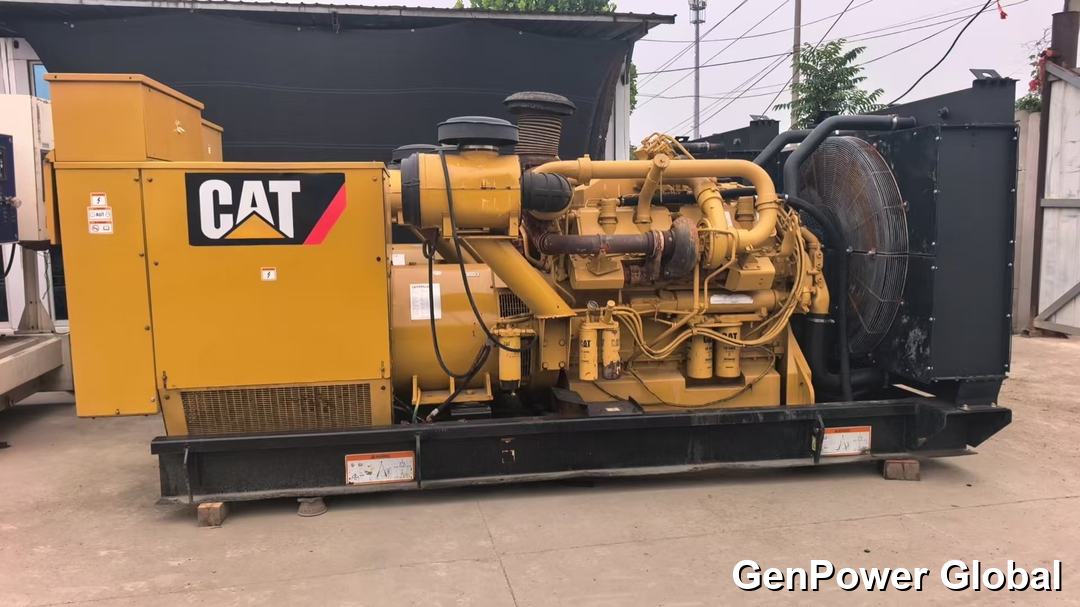
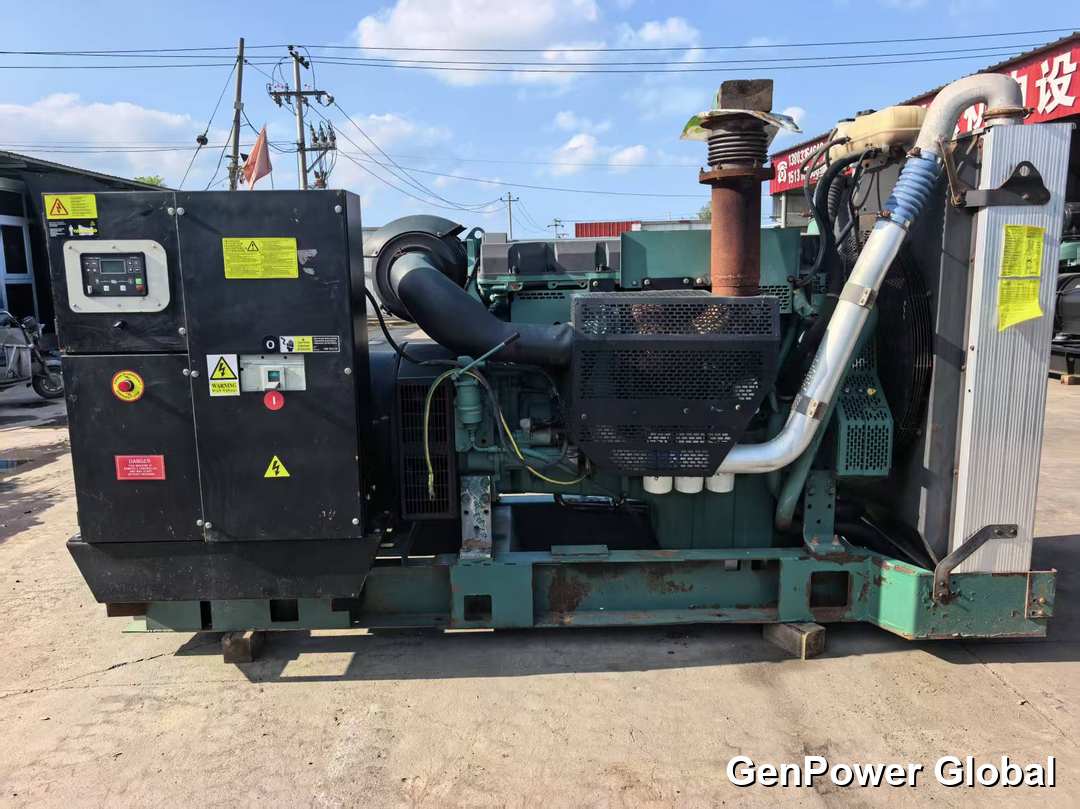
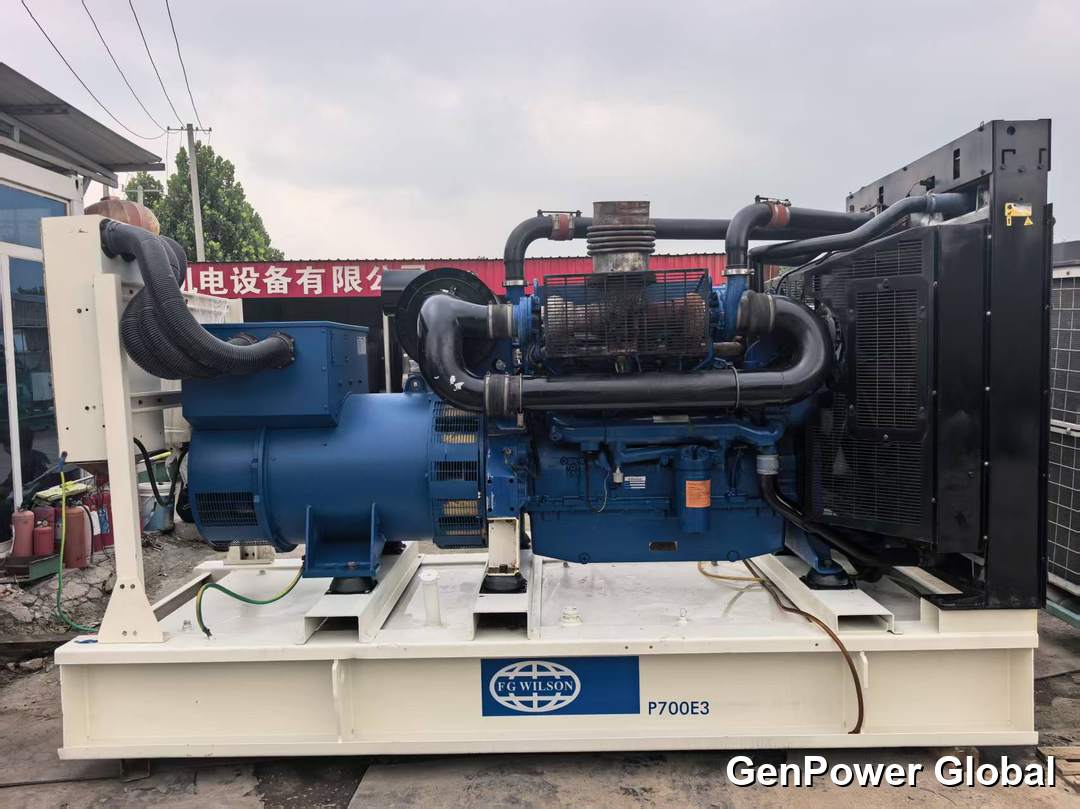
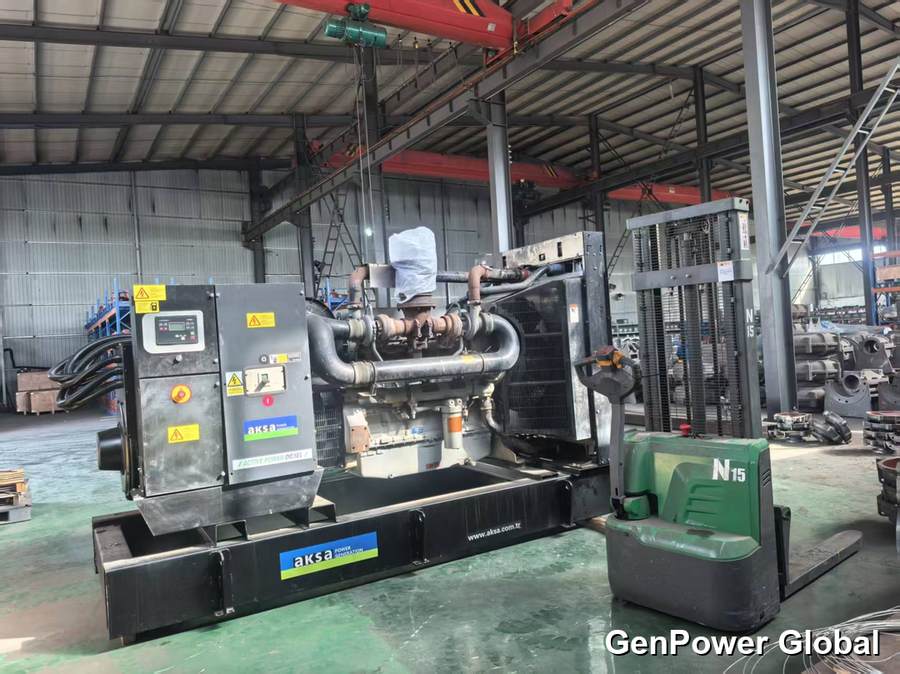
We are equipment exporters, not a customs broker and not a standards body; what we own is the inventory and the evidence behind it, across two yards in Shijiazhuang and Xiong'an, Hebei Province. On generating sets we currently hold a Cummins K38-G9 rated 1250 kVA on 860 hours (open-skid), a Caterpillar 3412 rated 900 kVA on 1,152 hours in USA-original condition, also open-skid, and a Cummins K19-G4 rated 550 kVA — real units you can view rather than catalogue images.
We deliberately do not print per-unit prices here, because a machine-specific price belongs beside that machine's own photographs and specifications. To see how these units are documented and priced individually, open the Cummins K38-G9 1250 kVA unit page or the Caterpillar 3412 900 kVA unit page, or browse our wider used generator range.
What we can do is concrete and checkable. For any set we photograph the controller or hour meter with the engine running, the data plate, the alternator nameplate and the serial number, and we can send a dated start-and-run video. We record the configuration honestly — open-skid or canopied, and the voltage and phase it is set for. We help assemble the documents a shipment needs — invoice, packing list, bill of lading details and a certificate of origin — and we match a set to your kVA band and port. What we will not do is certify a machine for a market or confirm a rule only the destination authority can decide. On price, every band here is subject to a live quote; on anything regulatory it is subject to the latest official notice and your local clearing agent.
Tell us the kVA and the port
Send the power band, the hours you will accept, your intended use, your budget and whether the set is bound for Lagos, Mombasa or elsewhere. We will reply with matched generators, real photos, an honest condition note and the documents we can prepare — within 12 hours.
Send Your Requirement8. Frequently asked questions
Do used generators need SONCAP in Nigeria?
As of October 2026, used products other than automobiles generally fall outside the core SONCAP scope, so a used generator usually needs no per-shipment Certificate of Conformity. Clearing still needs a Form M and a PAAR assessment, and we never treat this as a settled exemption — confirm with SON, subject to the latest official notice.
Do generators shipped to Kenya need a PVoC Certificate of Conformity?
Generating sets fall within Kenya's pre-export verification of conformity programme, run by KEBS, so a China-origin set normally needs a Certificate of Conformity before it sails. Our Kenya & Tanzania import-rules guide has the detail; confirm with KEBS, subject to the latest official notice.
Roughly what does a 100, 500 or 1250 kVA set cost FOB China?
2026/2027 reference ranges only, not a GenPower price, and each subject to a live quote. A used 100 kVA set typically trades around 6,000–12,000 US dollars FOB China; a 500 kVA set around 22,000–45,000; and a 1250 kVA around 55,000–110,000.
Why do two suppliers quote double for the same kVA?
kVA is only one line of a used generator's description. Two 500 kVA sets can differ by brand and engine family, verified hours, open-skid versus canopy, ATS or synchronising panel, voltage and phase, and alternator and controller.
How much should I budget on top of FOB to reach Lagos or Mombasa?
Expect freight, insurance, duty, VAT and the clearing layer on top of FOB. Ocean freight on a 40-foot container from China has recently run around 3,150–3,550 US dollars to Mombasa and 3,250–3,650 to Lagos, before peak-season surcharges. Each figure is a 2026/2027 reference, subject to a live quote and the latest official notice.
What is the difference between open-skid and silent-canopy generators on price?
An open-skid set is the bare engine and alternator on a steel base — cheaper, easier to service, louder. A silent canopy adds an acoustic enclosure, lifting the price of the same engine and alternator by commonly around ten to twenty percent.
Can you send photos, a running video and hours proof?
Yes. We photograph the controller or hour meter with the engine running, the data plate, the alternator nameplate and the serial number, and can send a dated start-and-run video. We document what the machine shows, not a reading's original history.
How fast can you match a unit to my requirement?
Send the kVA band, the hours range, your budget and your destination port; we reply with matched sets, real photos and documents within 12 hours.
Conclusion: the price gap is explainable, not mysterious
If you take one thing from this guide, take this: the difference between a cheap quote and an expensive one for the same kVA is not luck. It is the five price drivers — brand and engine family, verified hours, configuration, alternator and controller, and the documentation pack — plus the five places importers overspend between the yard and the quay: oversizing, an unneeded canopy, a missed ATS or voltage match, a re-assessed CIF, and demurrage at the port. Choose the right kVA band for the load and the destination, and you will save more than you ever win haggling over the last few percent.
Ready to move? Tell us the power band, the hours you will accept and your destination port — we will send you real machines with real photographs.
Send your requirement
Call +86 191 3116 9379, email yong@genpowerglobal.com, or send your requirement through the contact form. Tell us the kVA band and the port; we will match generators, document them honestly and tell you plainly what we can and cannot do on price and compliance.
Send Your RequirementRelated guides from our team
Browse current units on our used generator stock list, or see how we inspect and document every machine before you commit.
Sources: the regulation, tax and freight information here was compiled and checked in October 2026, drawing mainly on official and published material from SON, KEBS and the Nigeria Customs Service and from authorised inspection agencies; actual enforcement is subject to the latest official notice and confirmation by your destination clearing agent.
Editorial note: every regulation, fee, duty, tax and threshold mentioned is subject to the latest official notice from the relevant authority. All prices and cost figures are indicative 2026/2027 reference ranges in USD that vary with brand, year, hours, condition, specification, port and vessel space, and are subject to a live quote — they are not a GenPower commitment or a fixed sale price. The FOB and Mombasa columns are consistent with our companion Kenya & Tanzania import-rules guide; the Lagos column is indicative only. Nothing here is legal, tax or customs advice for your specific shipment; confirm current requirements with the destination authority and your licensed clearing agent before you commit money. Photographs were taken at GenPower Global's own yards in Hebei, China, and show the units described.