Caterpillar 320D2 vs Komatsu PC200: Hours, Price & Parts Cost in Africa (2027 Guide)
Ask ten contractors in Nairobi, Lagos or Dar es Salaam which 20-ton excavator they would buy and most will name one of two machines: the Caterpillar 320D2 or the Komatsu PC200. Both are proven, both are well known to African operators, and both are available used out of China in real volume. The argument is never about which machine is "better" in the abstract — it is about which one is cheaper to land, cheaper to run, and easier to keep working in your specific country. This guide compares the cat 320d2 vs komatsu pc200 on exactly those terms.
Quick verdict: the comparison table
Both machines sit in the 20-tonne class and perform the same core work — bulk excavation, trenching, loading trucks, quarry face work and general civil contracting. The differences that matter to an African buyer are in the engine and hydraulic architecture, in how easy each is to service locally, and in how the two hold their value on the used market. Here is the side-by-side.
| Specification | Caterpillar 320D2 | Komatsu PC200 (PC200-8 class) |
|---|---|---|
| Operating weight | Approx. 21.2–22.3 t depending on undercarriage and bucket | Approx. 19.5–20.0 t depending on configuration |
| Engine | Cat C7.1 ACERT, 6-cylinder, approx. 106–112 kW class (109 kW net flywheel depending on rating) | Komatsu SAA6D107E-1, 6-cylinder, approx. 110 kW class |
| Bucket capacity | Typically 1.0–1.4 m³ | Typically 0.8–1.2 m³ |
| Fuel burn (working) | Roughly 14–19 L/h in general earthmoving, higher in heavy rock work | Roughly 13–18 L/h in general earthmoving, higher in heavy rock work |
| Hydraulic system | Load-sensing hydraulics, well understood by independent mechanics | Open-centre load-sensing (CLSS), highly regarded but less forgiving of poor oil discipline |
| Electronics | Monitor panel with fault codes; ECM-controlled engine | Monitor panel with fault codes; electronic engine control |
| Parts availability in Africa | Strong authorised dealer presence and deep independent aftermarket across South Africa, Kenya, Nigeria, Tanzania | Strong authorised dealer presence and deep independent aftermarket, with particularly good coverage in East Africa |
| Used residual value | Holds value well; buyer demand is broad and resale is quick | Holds value well; often slightly cheaper to buy, slightly slower to resell in some markets |
| Typical buyer profile | Contractors who value service network and resale liquidity | Contractors who value purchase price and fuel efficiency |
Two honest caveats before the numbers. First, specification tables describe new machines; a used unit's real character is set by its hours, its service history and its operator. Second, generation matters more than brand. A tidy PC200-8 with verified hours is a better asset than a neglected 320D2 with a suspiciously low hour meter, and the reverse is equally true.
On engine power specifically, the two machines are in the same class rather than one being stronger than the other: both engines sit close to the 110 kW mark, so what a buyer actually feels on site comes down to hydraulic response, cycle speed and electronic control strategy — not to raw horsepower. Where they genuinely diverge is in hydraulic architecture and in how each tolerates poor fuel and oil discipline, which the rows below set out.
Used excavator price benchmarks in Africa
Buyers searching for a used excavator price in Africa usually expect one number. The honest answer is a range, because the spread between a 2012 machine with 12,000 hours and a 2019 machine with 5,000 hours is wider than the spread between brands. The figures below are 2027 reference ranges for FOB China, based on the condition, year and hour bands that actually trade out of Chinese yards. Prices vary with hours, year, condition and destination port — request a live quote before you budget.
| Machine | Typical year / hours band | Indicative FOB China (USD) |
|---|---|---|
| CAT 320D2 | 2013–2015, 8,000–12,000 hrs | 28,000–35,000 |
| CAT 320D2 | 2016–2019, 4,000–8,000 hrs | 35,000–45,000 |
| Komatsu PC200-8 | 2012–2015, 8,000–12,000 hrs | 25,000–33,000 |
| Komatsu PC200-8 | 2016–2019, 4,000–8,000 hrs | 32,000–42,000 |
The pattern is consistent: the PC200 typically asks two or three thousand dollars less than a 320D2 of the same age and hours, and the gap widens on older units as Cat residual value holds firmer. On the purchase invoice, the Komatsu looks like the cheaper machine. What happens next depends on where you operate.
From FOB to your yard: the landed cost stack
A used excavator is not shipped as a neat parcel. At roughly 20 tonnes and above, a single unit usually moves by flat rack, break-bulk or a container with the cab and boom handled carefully — and each method prices differently. Budget these layers on top of the FOB number:
- Ocean freight and marine insurance. For a single 20-tonne unit from a Chinese load port to Mombasa, Lagos or Durban, plan on a meaningful five-figure USD figure in most seasons, with wide swings depending on whether the unit fits a container, whether a flat rack is available, and how tight vessel space is.
- Destination charges. Terminal handling, agency fees, documentation and port storage accumulate quickly if clearance is slow.
- Duty and VAT. Set by the destination country and the declared value of the machine. Rates differ between Kenya, Nigeria, South Africa and Tanzania, and used machinery frequently attracts a different treatment from new equipment.
- Pre-shipment inspection. Some destinations require a conformity or pre-export verification certificate for used machinery, arranged before the vessel sails. Treat this as a scheduled cost, not a surprise.
- Local transport. A 20-tonne excavator needs a low-bed trailer and, in some cities, permits. Confirm the trucking rate to your site before you commit, because the last fifty kilometres are rarely free.
As a planning rule of thumb — and only a rule of thumb — buyers should expect the landed cost to sit roughly 10–20% above the FOB price before duty and VAT, and to pay duty and VAT on top of that. On a USD 35,000 machine that is a material difference in budget, and it is why a cheaper FOB quote can end up the more expensive purchase if it is slow to clear or badly documented. For a CIF quote to your port tied to a specific vessel, ask us directly rather than extrapolating percentages.
Running costs: fuel, service and wear parts
Once the machine is on site, the monthly cost is dominated by three things: diesel, scheduled service and wear parts. Both machines are reliable when maintained, and both punish neglect in the same way — the difference is in the details.
Fuel consumption
In ordinary earthmoving duty — loading trucks, trenching, stockpiling — both machines sit in the mid-teens of litres per hour, with the PC200 usually showing a small advantage of perhaps half a litre to a litre and a half per hour in comparable work. In heavy rock or continuous high-load work both climb into the high teens. Over 2,000 hours a year, a one litre per hour difference is a real fuel bill, so on pure economy the PC200 has a modest edge. That edge can disappear if the PC200 is run on poor-quality diesel: the CLSS hydraulic system and the electronically controlled engine are sensitive to dirty fuel and missed filter changes, and repairs to either are not cheap.
Scheduled service
Service intervals on both are conventional: engine oil and filters at the usual hundreds of hours, hydraulic oil and return filters on a longer cycle, and fuel filters frequently. The cost of the consumables is similar, and both brands' filter sets are widely stocked in regional capitals. Independent mechanics in Kenya, Nigeria and South Africa are familiar with both machines, though the 320D2's load-sensing system is arguably the more commonly understood architecture in workshops that see mixed fleets.
Wear parts and the komatsu pc200 parts cost in Kenya question
Undercarriage is the biggest wear item on any 20-ton machine. Tracks, rollers, idlers and sprockets on both models are priced in a similar band, with genuine parts costing multiples of aftermarket equivalents and aftermarket quality varying enormously. Bucket teeth, adapters, cutting edges, hydraulic hoses, seals and injector parts are all obtainable for both machines in Nairobi, Lagos and Johannesburg, usually within days rather than weeks for common items.
On the specific question of Komatsu PC200 parts cost in Kenya, the practical answer is that parts are available and competitively priced for common items, and the authorised network is well established. Where buyers get caught is on less common assemblies — a hydraulic pump, a swing motor, a turbocharger, a monitor panel — where lead time and price depend on whether the local dealer holds stock or must import. Cat's advantage in some markets is that parts interchangeability across the D-series and later generations gives the aftermarket more options; Komatsu's advantage in East Africa is a long-established local presence. Neither brand will leave you stranded for filters; both can leave you waiting for a major component if you have not checked stock before the machine fails.
Actionable advice: before you buy either machine, take the serial prefix to a local parts house and ask them to price four specific items — a hydraulic return filter, a set of bucket teeth, a final drive seal kit and an injector. What they can quote from stock tells you more about your real running cost than any brochure.
Which machine for which job
The right answer depends on the work, not the badge. Here is how we would advise a buyer today.
- Quarry and aggregates. Both machines load trucks all day, and both take a beating on rock. The 320D2's broad parts network and strong resale make it the slightly safer long-term asset; the PC200's fuel economy matters if you are running it for tens of thousands of hours. Buy on condition and undercarriage wear rather than brand.
- Municipal and utility work. Trenching, drainage and roadworks reward precise hydraulics and a clean service record. Either machine works well; pick the unit with the better maintenance history and the tighter pins, because this is low-load work where a sloppy machine is simply uncomfortable and inaccurate.
- Mining support and haul-road work. If the machine works in dust and heat beside a mine, prioritise cooling system condition, hydraulic oil cleanliness and local parts access. In many African mining regions the Cat dealer footprint is an advantage for major component turnaround.
- General earthmoving contracting. If you are buying your first 20-ton machine and expect to resell it within a few years, Cat's liquidity is worth a premium. If you plan to keep it for its working life and can enforce fuel and filter discipline, the PC200's lower purchase price and slightly better fuel burn pay you back over time.
What about Chinese brands like SANY and Shantui?
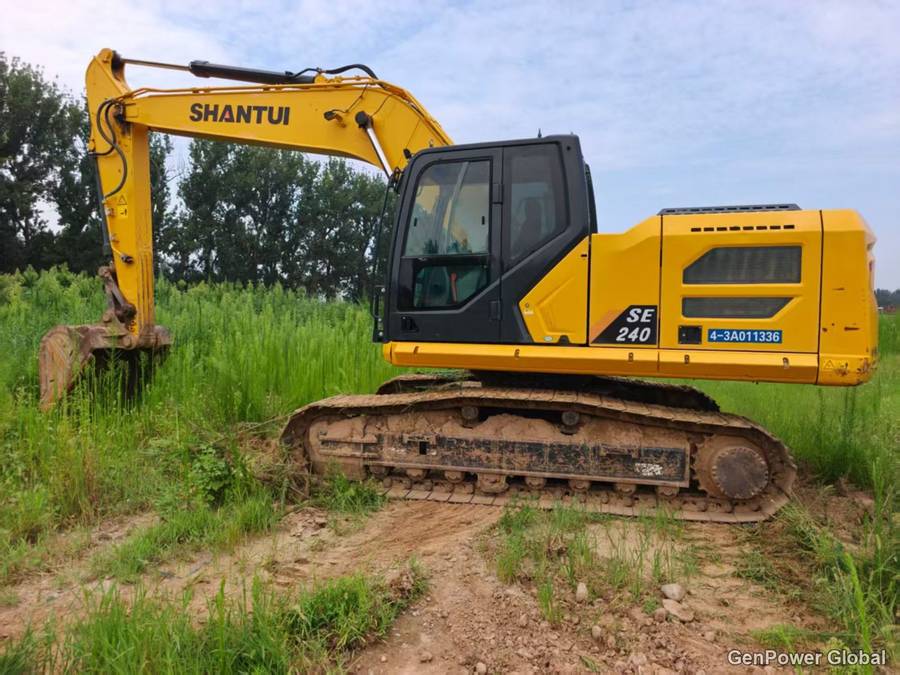
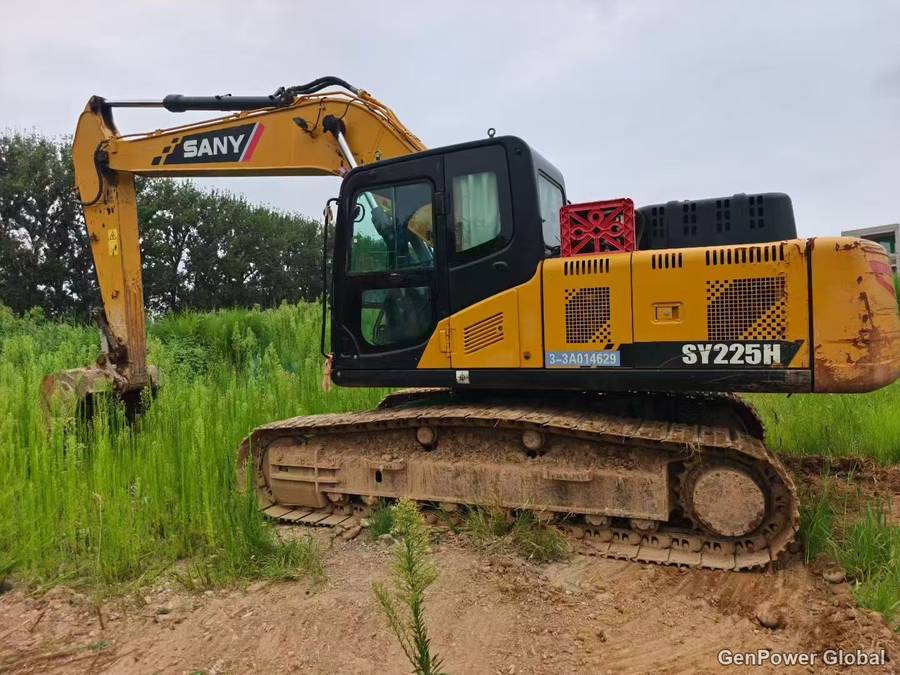
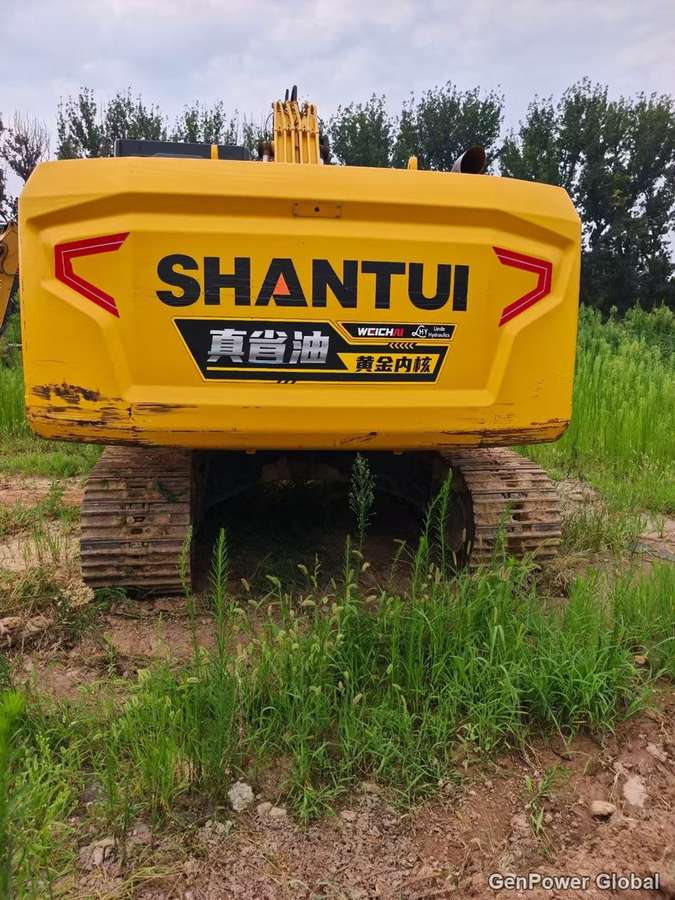
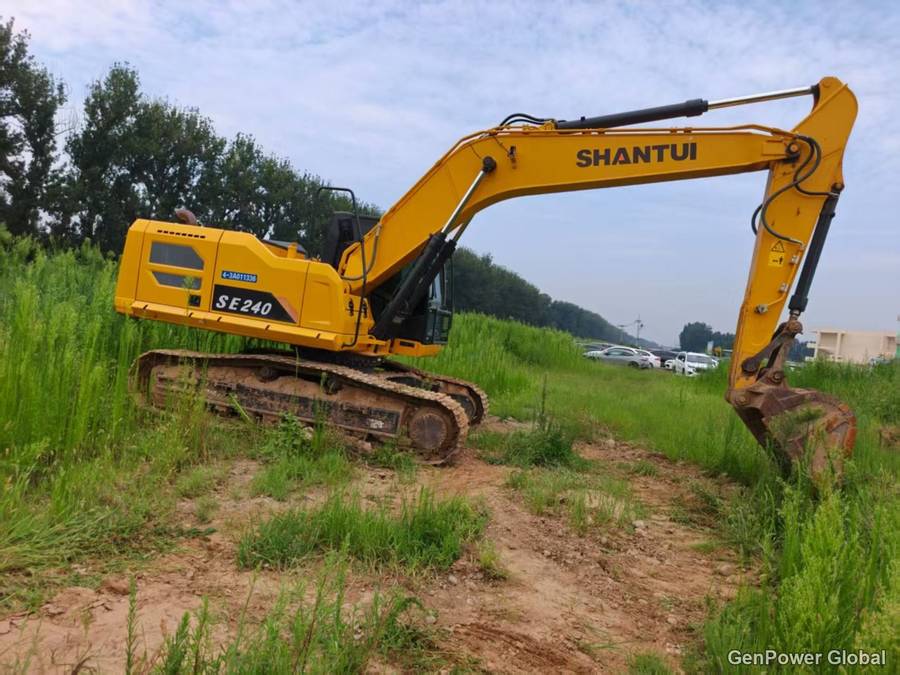
The question that follows almost every CAT 320D2 vs Komatsu PC200 conversation is whether a used Chinese-brand 20-ton machine deserves a place on the same shortlist. We will answer it plainly, because we are in an unusual position to compare them: we operate two equipment yards in Hebei Province — one in Shijiazhuang, one in Xiong'an — carrying close to a hundred machines. CAT, Komatsu, SANY and Shantui units stand and work side by side on the same ground there, and every photograph in this guide was taken in our own yards. When we say the comparison is closer than most buyers assume, that is not marketing; it is what we handle every week.
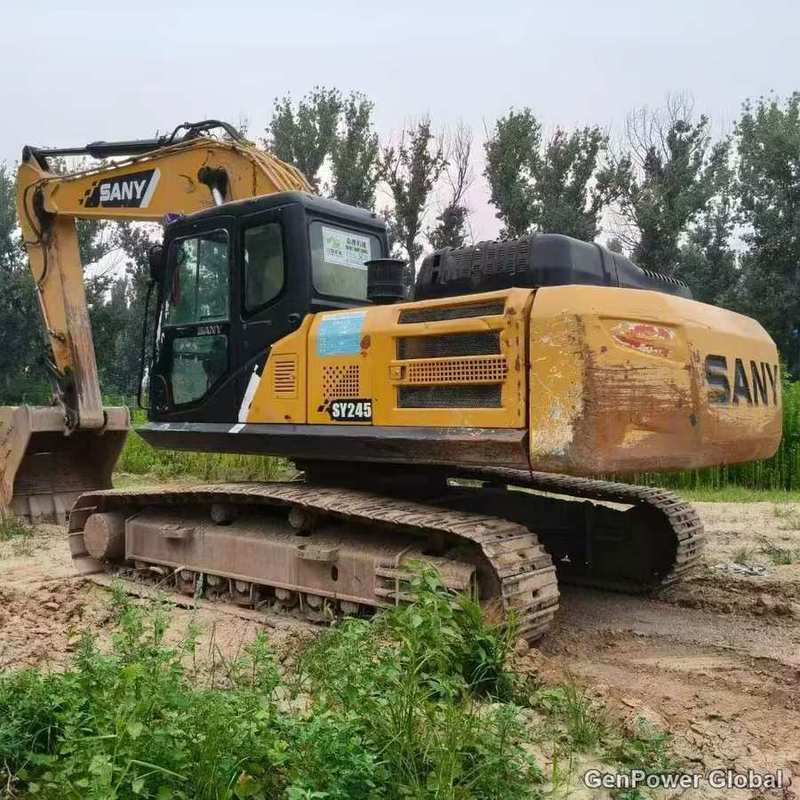
On purchase price, the pattern is consistent: for the same year and similar hours, a used SANY or Shantui 20-ton machine usually costs noticeably less than either of the two machines in this guide. On parts, both Chinese brands have deep supply networks inside China — Shantui sits within the Weichai group, so major engine components are straightforward to source — and their independent service and parts coverage in several African markets is growing year by year, particularly in the larger cities of West and East Africa.
Where they still trail is resale. In most African markets, a used Chinese-brand machine takes longer to resell and returns less of your money than a CAT or Komatsu in comparable condition. If your business plan rotates equipment every two or three years, that gap is real money. If you plan to run the machine to the end of its working life, it matters far less.
Notice that this is exactly the same trade-off as the CAT vs Komatsu decision itself — purchase price on one side, residual value and parts depth on the other — only with the weightings pushed further apart. And the inspection checklist in the next section applies to every brand equally: a Chinese-brand machine with honest, verified hours is a far better buy than a CAT whose hour meter has been tampered with.
What to inspect on each model
This is the part that changes outcomes. Beyond the universal checks — hours, serial plates, start-and-work video, undercarriage percentage, hose condition, no welds on the boom — each model has its own tell-tale failures and its own ways of hiding a hard life.
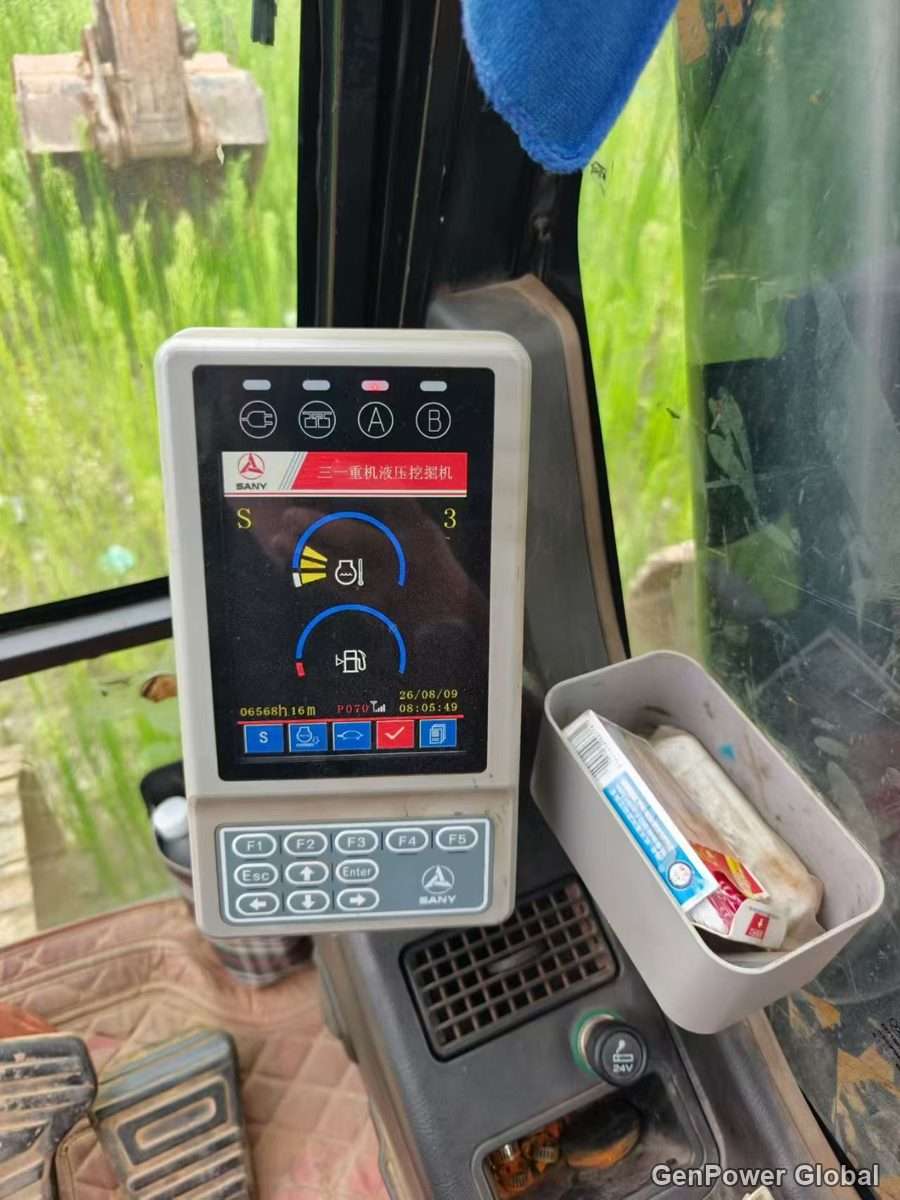
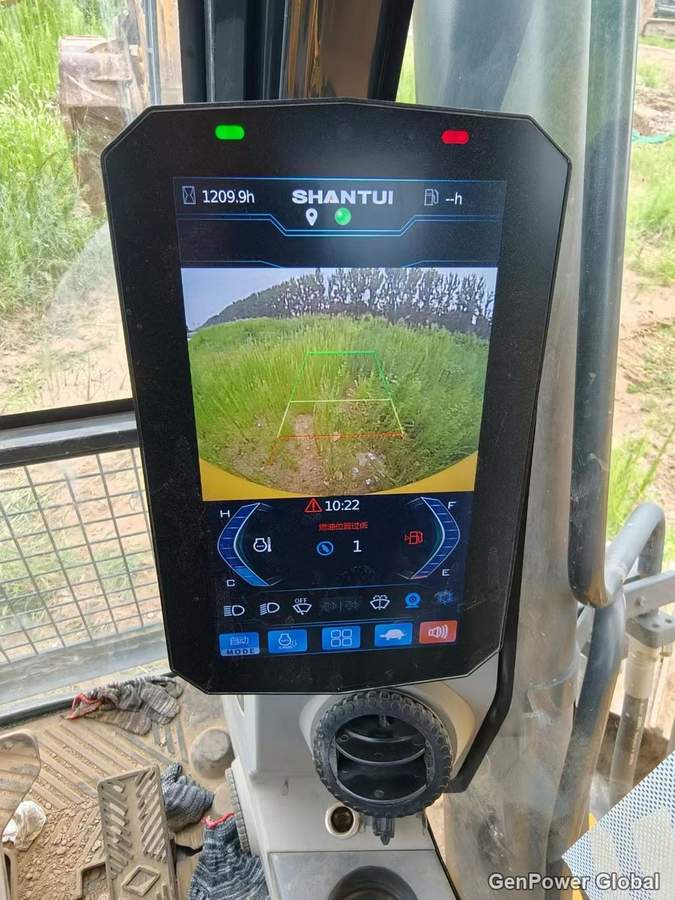
Both hour-meter photos above were taken with the engines running. On any brand, the panel is only a claim — the wear on the machine is the evidence.
On the Caterpillar 320D2, look specifically for:
- Monitor panel behaviour: check for a replaced or "no hours" panel, which is the classic sign of an hour meter reset
- Engine blow-by with the machine warm, and evidence of injector or fuel-system work in the service record
- Hydraulic oil colour and smell — dark, burnt oil on a "low hours" machine is disqualifying
- Hydraulic pump and control-valve area for fresh sealant, which often hides an attempt to stop a leak before sale
- Fresh paint on the counterweight, boom or cab floor, especially when the rest of the machine is faded — it usually marks a repair
- Centre joint play: lift the front, rock the machine and watch the swing bearing for movement
- Turbocharger play and oil presence in the intake
On the Komatsu PC200, look specifically for:
- Hydraulic oil condition and filter dates — CLSS components are the most expensive mistake on this machine
- Swing motor and travel motor behaviour: slow or jerky swing and weak tracking under load are negotiation points, not details
- Monitor panel authenticity and any fault-code history, plus whether the panel has been swapped
- Boom and arm re-welding around the pin bosses, and cracks radiating from the bucket linkage
- SAA6D107E-1 engine: exhaust colour, blow-by and oil residue around the turbo and manifold
- Undercarriage percentage measured, not guessed — chains, sprockets and bottom rollers tell the real hours story
- Fuel-system condition: water in the fuel, contaminated filters and any sign of the machine sitting unused for long periods
The five-minute test that beats a spec sheet
Ask for a single continuous video, shot today, showing the machine starting cold, idling, then digging a full bucket of material through a full cycle, with the hour meter visible at the start and the serial plate visible at the end. A genuine seller produces it within a day. A photograph of a machine in a different yard, on a different day, with a different machine in the background, is the most common warning sign in this trade.
Verdict and how to buy
If forced to choose one sentence: buy the Caterpillar 320D2 when resale value, service network and broad independent parts support matter most, and buy the Komatsu PC200 when the purchase price and running economy matter most and you are disciplined about fuel and filter maintenance. On identical age and hours, the PC200 will usually cost you less to acquire and slightly less to run; the 320D2 will usually be easier to sell and easier to keep supplied in a hurry.
What matters far more than the badge is the specific unit in front of you. A verified-hours machine with a straight undercarriage and clean hydraulic oil beats a low-hour claim with no evidence, every time, on both brands. Decide your budget landed rather than FOB, confirm local parts before you commit, verify the hours in layers, and buy from a seller who welcomes inspection instead of resisting it.
Looking for a 20-ton excavator with verified hours?
Every unit in our yard is inspected, filmed and priced in USD FOB, with CIF quotes available to Mombasa, Lagos, Durban, Dar es Salaam and Tema. Send your spec and receive matched machines with video within 12 hours.
Request the Live Stock ListBrowse current units on our used excavator stock list, or read how we inspect and document every machine before you commit.
Editorial note: all prices in this guide are indicative 2027 reference ranges in USD and vary with hours, year, condition, specification and destination port — always request a live quote before committing budget. Freight, duty, VAT and inspection charges are set by carriers and destination authorities and change frequently; confirm current figures with your clearing agent. Specifications describe typical configurations and can differ between machines and generations. Nothing here is a substitute for physical or third-party inspection of the specific unit you intend to buy.